How to Choose the Right Animation Style for Your Social Impact Campaign
Animation speaks in different visual languages. The style you choose shapes what your audience feels, what they remember, and how they act.
An animation style built for clear, accessible information delivery serves a completely different purpose than one designed to make viewers fall in love with a character. Similarly, a high-craft cinematic film carries its own distinct emotional weight.
Choosing the right look means matching the visual style to your campaign’s core objective. This guide breaks down three primary production styles for social impact animation so you can make the right strategic decision before production begins.
Key Takeaways
Match your goal to the animation style: Use motion graphics for nonprofits looking to explain complex topics in a clear, accessible way, character animation for deep emotional connection, and cinematic storytelling hero films, fundraising tentpole pieces, and anything where craft is part of the message.
Lock in your style during the strategy phase: Choosing the style early means production decisions are built on the right foundation from the start.
Style and budget are connected: Motion graphics offer a highly accessible entry point, while character-driven and cinematic styles require more production hours and craft investment.
Applying for funding? We can help with the story. ✍️
If you're an impact organisation writing a grant proposal, our free tool builds the storytelling section for you. It helps you work out who you're trying to move, what you need them to feel, and the right animation style to get there, plus a costed budget, in about 10 minutes.
Three Production Styles for Social Impact Animation
The most effective way to approach animation is to let the story dictate the style. Here is how the three main production styles function in animation for NGO campaigns.
Motion Graphics and Illustration
Best for: educational explainers, public health messaging, policy explainers, donor-facing impact summaries.
Motion graphics and illustration are built around typography and illustration as the core visual language rather than character or story. The strength of this style is clarity. It can take a complex system, a policy argument, or a public health message and make it accessible to a broad audience without requiring any prior knowledge of the subject.
Because it doesn't rely on narrative to carry the message, it works across a wide range of channels and formats, from donor-facing impact summaries to social media cutdowns, and it tends to be the most efficient style to produce across multiple assets within a campaign.
Example in Action: Collective Impact: Generation Gender takes a dense evaluation report covering 30 changes in law and policy across seven countries and boils it down into something you can watch, and get, in two minutes. Real photography, cultural details, and mixed-media collage give each country its own visual identity, so a story spanning seven very different places still feels like one film.
Character-Led Narrative
Best for: campaign launches, story-driven explainers, and any campaign where a relatable character carries the message and the work needs warmth and specificity.
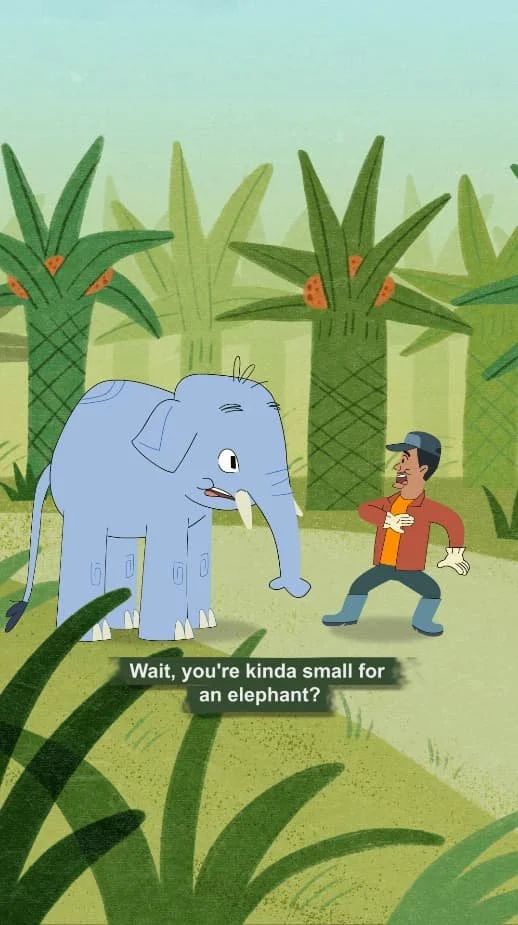
Character animation for social impact puts a specific person or character the audience can feel alongside at the centre of the story. Through hand-drawn or stylized animation, the audience connects deeply with a single person's lived experience. This style shines when a cause is best understood through a personal lens.
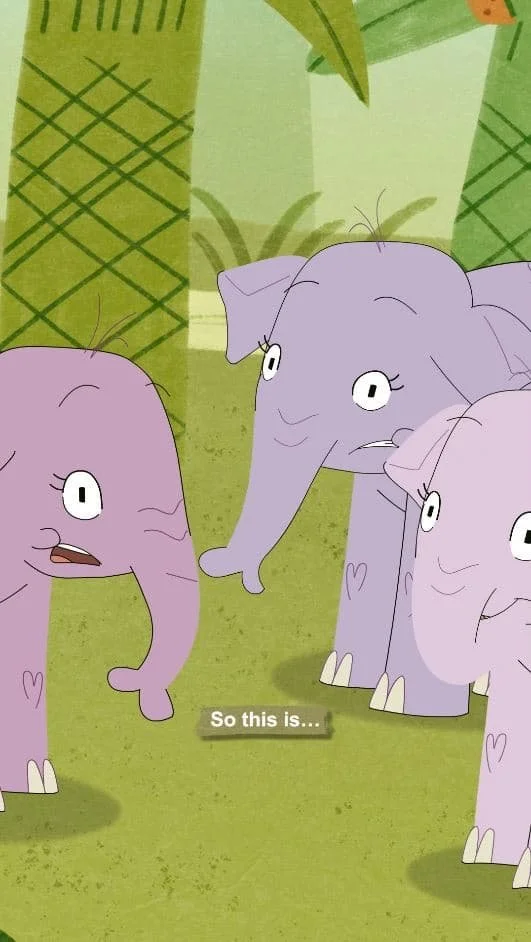
Example in Action: Jalan Arif is a hand-drawn animated series produced by ROUGE Collective in partnership with the Malaysian conservation NGO Seratu Aatai. By following Ahmad, an oil palm worker, and Arif, a teenage Bornean elephant, the advocacy work succeeds because the audience learns to care about the characters first.
Episode 1
Episode 2

Episode 3
High Storytelling and Cinematic
Best for: hero films, campaign films, anniversary and milestone films, fundraising tentpole pieces, and anything where craft is part of the message.
High storytelling and cinematic is the most craft-intensive of the three styles, covering work that combines characters, environments, 3D animation, stop-motion, mixed media, or live action, with original music composition where the budget allows. The defining characteristic of this style is that the craft itself is part of the message, and the production communicates something about the importance of the cause.
This style is built for emotional connection at the highest level of investment, where the campaign calls for something that will stand on its own as a piece of work, not just as a communications asset.
Example in Action: Conception: Catie + Jen, produced for the New York Times, demonstrates the power of this tier. Its textured 2D illustration and layered visual language guide the audience through a deeply personal, emotionally driven subject.
How to Match Animation Style to Your Campaign Objective
The simplest way to make the style decision is to start from what the campaign needs to produce in the audience, and work backwards. If the goal is to explain something clearly and make it accessible to a broad audience, motion graphics and illustration is the natural fit. If the campaign needs the audience to feel something through a relationship with a specific character, character-led narrative does that work more effectively than any amount of information delivery. And if the campaign is a milestone moment, a fundraising centrepiece, or a piece where the production quality itself signals the importance of the cause, high storytelling and cinematic is where that kind of impact lives.
Style choice also has a direct bearing on budget and timeline, which is another reason to make it early. Motion graphics and illustration is generally the most accessible starting point in terms of production cost. Character-led narrative and high storytelling and cinematic involve more hours across more production disciplines, and the budget reflects that. Knowing which style fits the campaign from the start means the budget cell in a grant proposal can be accurate rather than estimated.
Work With an Animation Studio Built for Social Impact
ROUGE Collective is Asia's first B Corp-certified animation studio. Co-founded by Vann Law and Thomas Dohm, we partner with NGOs, social enterprises, and impact organisations across Southeast Asia and internationally, with a distributed team of local storytellers across Singapore, Malaysia, Thailand, Indonesia, and beyond, because the best stories about a place are told by the people who know it from the inside.
Our social impact work spans campaign types and animation styles, from Sang Kancil for Sustainable Travel in Malaysia to Collective Impact: Generation Gender, a gender justice film spanning seven countries.
If you're planning a social impact campaign and want to match your objective to the right animation style, our Grant Proposal Maker walks you through the process and generates a costed brief, free. Or book a free 30-minute call to talk through your campaign before you commit anything to paper.
Frequently Asked Questions
What is the best animation style for nonprofit campaigns?
It depends on what the campaign needs to do. If you're explaining something complex, motion graphics is usually the right fit. If you need the audience to connect emotionally with a character, go character-led. And if the campaign is a hero film or milestone piece, high storytelling and cinematic is where that impact lives.
What is the difference between motion graphics and character animation for social impact?
Motion graphics delivers information clearly through typography and illustration. Character animation builds emotional connection through a character the audience grows to care about. Same medium, different jobs.
How does animation style affect production budget?
Style and budget are more connected than most teams expect. Motion graphics is generally the most accessible entry point. Character-led narrative and cinematic work involve more production hours, and the cost reflects that. The Grant Proposal Maker gives you a real figure based on your specific campaign.