Which Emotions Drive Action in NGO Campaigns (And How to Choose the Right One)
Every campaign is built around a feeling, whether or not the team has named it. The ones that move people, that turn an audience from passive observers into donors, advocates, or behaviour-changers, tend to have something in common. The emotion was chosen deliberately, matched to a specific audience and a specific action, rather than left to default.
Understanding which emotions drive action in NGO campaigns, and how to choose the right one for what you're trying to achieve, is what this piece is about.
Why Emotion Is the Engine of Every Effective Campaign
Paul Slovic at the University of Oregon has spent decades documenting something that campaign teams tend to discover the hard way. Human beings respond emotionally to one identifiable person and go numb in front of statistics, even when the statistics describe many more people in worse situations. He calls it psychic numbing, and it's why irrefutable data at enormous scale can still produce silence.
Marshall Ganz at the Harvard Kennedy School built a methodology called Public Narrative around the same insight, and it went on to power the grassroots organising of the Obama 2008 campaign and dozens of social movements since. Emotion is what bridges story and action, taking someone from understanding a problem to doing something about it.
Most people working in the impact sector already know this, at least in principle. Storytelling shows up in funder briefs, comms decks, and strategy documents. The harder question, and one that rarely gets answered before the budget is set, is which emotion to build the campaign around, because not every strong emotion drives action. Some of the most powerful ones do the opposite.
Applying for funding? We can help with the story. ✍️
If you're an impact organisation writing a grant proposal, our free tool builds the storytelling section for you. It helps you work out who you're trying to move, what you need them to feel, and the right animation style to get there, plus a costed budget, in about 10 minutes.
The Six Emotions That Drive Action in NGO Campaigns
To make this more practical, ROUGE Collective adapted a cause-led feelings wheel specifically for impact campaign planning. It organises six emotion families by the actions they tend to produce, with specific sub-emotions within each family to help you get precise about the feeling your story needs to create.
A ROUGE Collective proprietary framework
Empathy
Empathy moves people to witness, recognise, and connect. The sub-emotions in this family, compassion, tenderness, and witness, work particularly well when the audience can see someone like them in the story, creating a sense of shared experience that makes action feel personal rather than charitable.
Hope
Hope moves people toward possibility, and sub-emotions like optimism, determination, and renewal are the feelings that make action feel worth taking, since they suggest change is actually achievable.
Indignation
Indignation moves people to act against injustice. Sub-emotions like outrage, conviction, and defiance are strong activators for advocacy and policy campaigns where the audience needs to feel both that something is wrong and that they have standing to say so.
Elevation
Elevation moves people to aspire and act from a sense of moral beauty. Sub-emotions like inspiration, admiration, and aspiration are the feelings people experience when they witness someone doing something genuinely good, and elevation tends to produce the desire to be part of that goodness.
Awe
Awe moves people to feel humility and wonder. Sub-emotions like revelation, wonder, and humility work well for campaigns where the scale or beauty of the cause is itself the message, creating a felt sense of something worth protecting or being part of.
Belonging
Belonging moves people toward solidarity and shared purpose. Sub-emotions like kinship, pride, and shared purpose make someone feel like part of a community of people who care, and belonging is the strongest family for campaigns trying to build a movement rather than trigger a single action, since it connects an individual's contribution to something larger than themselves.
The Emotions That Often Backfire (And Why They're So Easy to Reach For)
Not every strong emotion drives action in the way a campaign intends. Some land powerfully as the interior emotion of a character on screen but backfire as the viewer's takeaway, producing the opposite of the response a campaign is trying to drive. Here's a quick look at the ones worth watching out for.
| Emotion | Why it feels like the right choice | What it can produce instead |
|---|---|---|
| Fear | Signals urgency | Avoidance |
| Shame | Feels honest | Defence |
| Despair | Reflects reality | Disengagement |
| Disgust | Feels visceral | Othering |
| Guilt | Feels motivating | Long-term resistance |
| Pity | Feels compassionate | Condescension |
| Cynicism | Feels realistic | Disengagement from being moved |
Some of these work well as the interior experience of a character within a story. The difficulty comes when they become the primary feeling the audience is meant to walk away with, since that's where they tend to work against the action a campaign is trying to drive.
How to Choose the Right Emotion for Your Campaign
So where does that leave a campaign team trying to make the choice? The starting point is to name the feeling that drives the action you need, and to be specific about it, since indignation at injustice, hope that change is possible, belonging to a group of people who care, and empathy for a person on screen are all meaningfully different, and they lead to different stories and different outcomes.
If you want a fuller walkthrough of how to build the emotional strategy into your campaign planning from the start, our piece on storytelling for NGO campaigns covers the full WHO, FEEL, DO framework in detail.
And once you've named the feeling, the cause-led feelings wheel inside the Grant Proposal Maker helps you get specific about which sub-emotion within that family fits the action you're designing for. It's free to use, and it forms part of a broader tool that takes your campaign brief through to a costed production plan.
A Worked Example
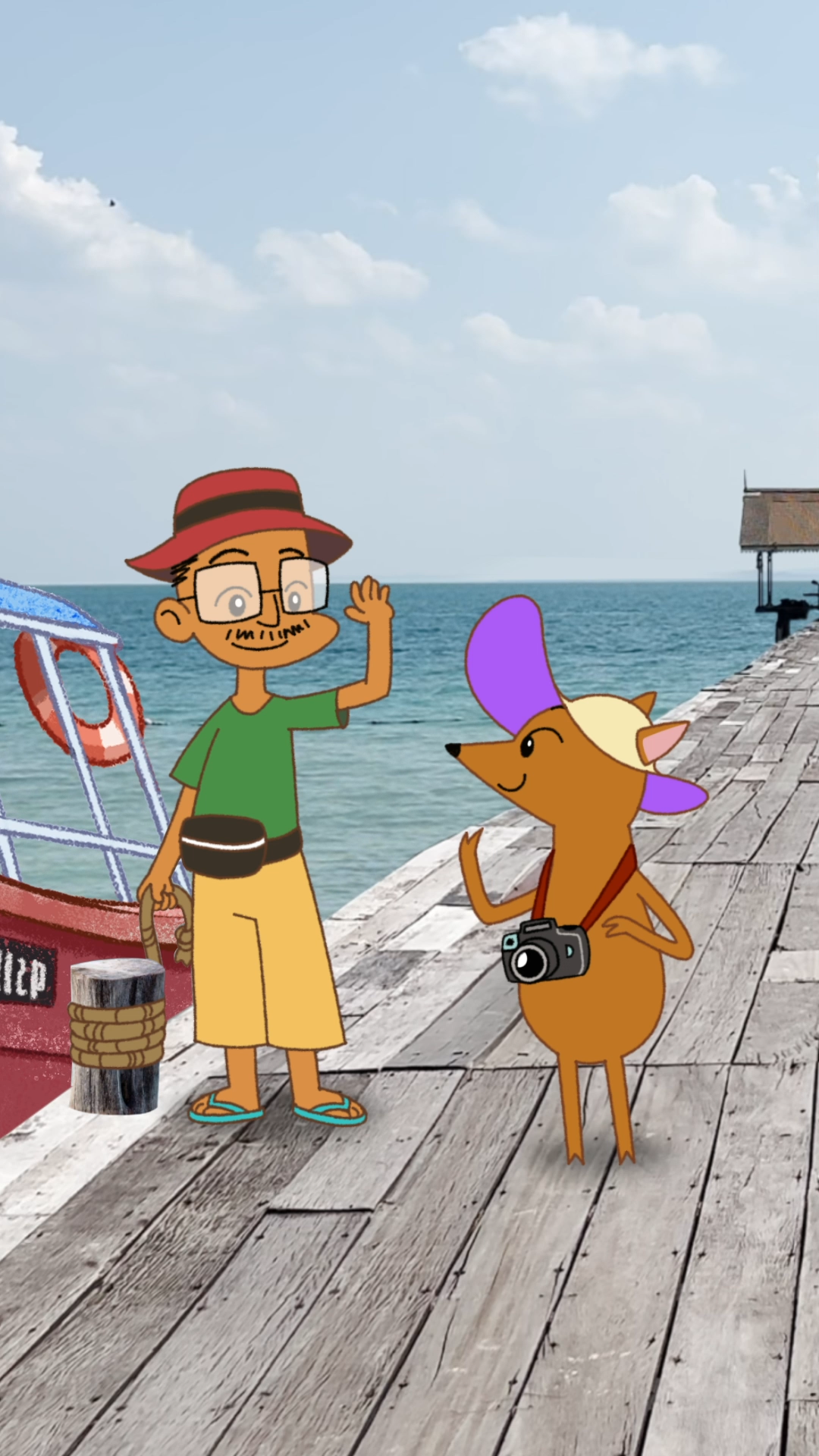
Sang Kancil and Sustainable Tourism is an animated series we made with The Habitat Foundation to support sustainable travel in Malaysia. Episode 3 takes Sang Kancil, a mouse deer character, to a traditional kuih stall in Penang. The auntie packs everything in plastic boxes, because that's how Malaysian kuih stalls work today.
Episode 1

Episode 2

Episode 3
The emotion we chose was elevation, specifically inspiration. The plastic feels like one of those things no single customer can fix, so rather than leaning into guilt or urgency, the story shows the one small thing that actually is in a customer's hands, bringing your own container, and lets the audience arrive at the thought themselves: I could do that too.
Elevation gave the audience agency rather than guilt, and the story carried them to a moment where action felt natural rather than demanded.
Ready to Choose the Right Emotion for Your Campaign?
Planning an NGO campaign and not sure where to start with the emotional strategy? Our Grant Proposal Maker walks you through who you need to reach, what you need them to feel, and what you need them to do, including the cause-led feelings wheel to help you land on the right emotion. At the end, it generates an editable Word document with the strategy, budget, partnership, measurement, and sustainability sections already written out, ready to drop into your proposal.
And if you're working out which animation style fits your campaign or want to understand what production actually costs for NGOs, those are good next reads.
Frequently Asked Questions
What emotions work best for NGO campaigns?
It depends on your audience and what you need them to do. The six emotion families that tend to drive action are empathy, hope, indignation, elevation, awe, and belonging. Each one produces different kinds of action, so the choice should follow from what you're asking your audience to do next.
What is the cause-led feelings wheel?
It's a tool we adapted from public-domain feelings wheels, reorganised around the actions each emotion tends to drive. It maps six emotion families with specific sub-emotions within each, and the live interactive version sits inside the Grant Proposal Maker as part of the campaign planning process. Try the Grant Maker tool free and see which emotion fits your campaign.
References
Slovic, P. (2007). "If I look at the mass I will never act": Psychic numbing and genocide. Judgment and Decision Making, 2(2), 79–95.
Small, D. A., Loewenstein, G., & Slovic, P. (2007). Sympathy and callousness: The impact of deliberative thought on donations to identifiable and statistical victims. Organizational Behavior and Human Decision Processes, 102(2), 143–153.
Ganz, M. (2011). Public Narrative, Collective Action, and Power. In S. Odugbemi & T. Lee (Eds.), Accountability through Public Opinion: From Inertia to Public Action (pp. 273–289). Washington, DC: The World Bank.